Stack412
Gut Health · Synbiotics

Best Synbiotic Supplements of 2026: Top Combined Probiotic + Prebiotic Picks for Gut Health

Updated 2026-09-18 · Curated by Stack412

A synbiotic is simply a product that combines live beneficial bacteria (probiotics) with the fiber-based food those bacteria thrive on (prebiotics) — all in one formula. The logic is sound: delivering both together means the probiotic strains arrive with fuel already on board, which can support a more hospitable environment in the gut. The category has gotten crowded fast, so it's worth knowing what separates a thoughtfully formulated synbiotic from a product that's just riding the buzzword.

When you're shopping, look for a few honest signals: a diverse strain count (more strains isn't always better, but variety helps), a meaningful CFU count (1–10 billion is reasonable for daily maintenance; higher isn't automatically superior), named prebiotic fibers like inulin, FOS, or chicory root rather than vague "proprietary blends," and transparent third-party testing. Price matters too — a $25 option you'll actually take every day beats a $75 tub gathering dust. We also pulled in a standout prebiotic soda pick, because getting your prebiotics as a daily sparkling drink is genuinely a great habit anyone can stick to.

At a glance

# Drink Best for Key actives Rating
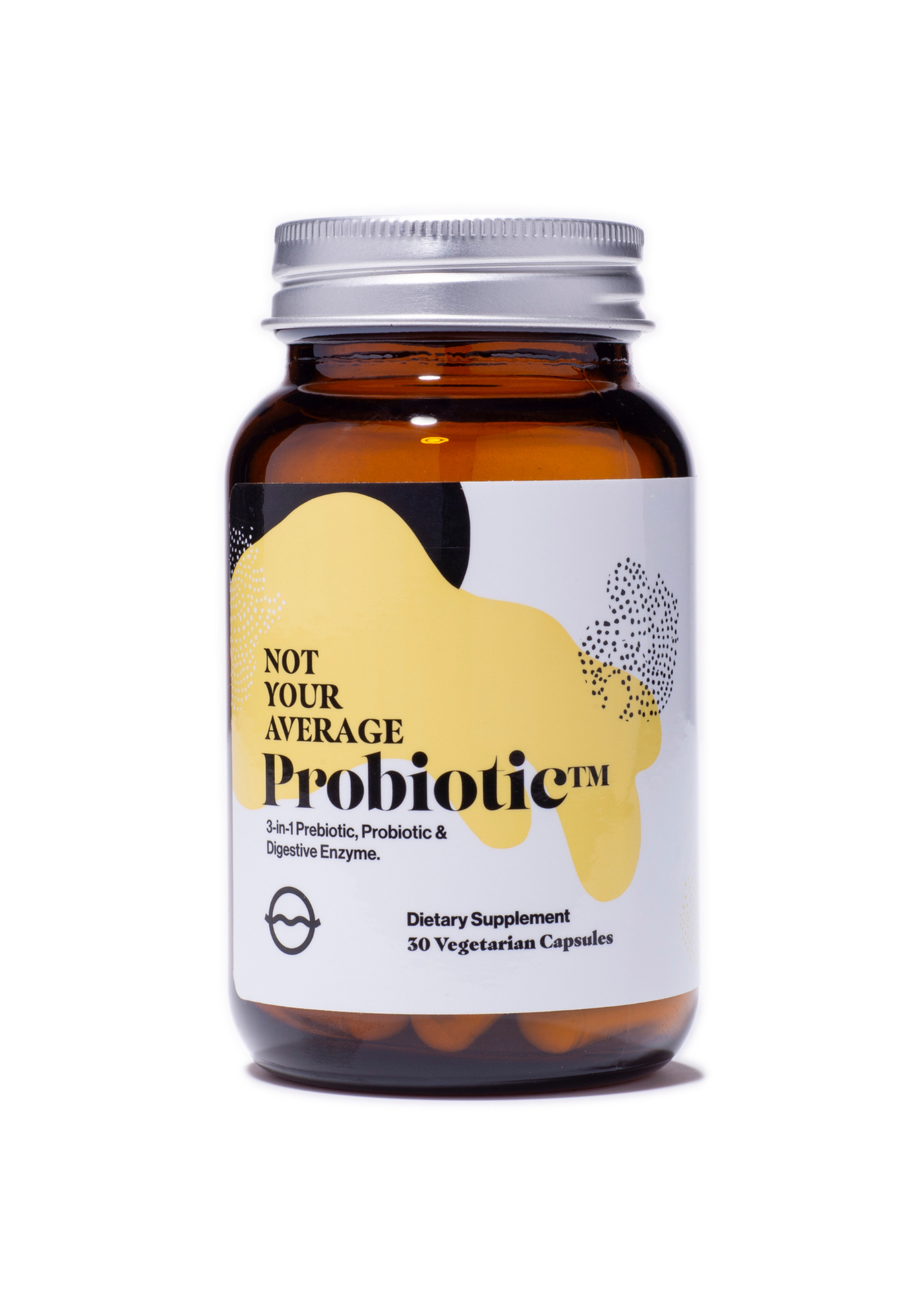
1 Organic Olivia — Not Your Average Probiotic Whole-food-minded gut support Multi-strain probiotic blend, prebiotic fiber support ★ 4.9
2 Love Wellness — Good Girl Probiotics® Women's daily gut + vaginal microbiome balance Multi-strain Lactobacillus probiotic blend ★ 4.8
3 Stonehenge Health — Dynamic Biotics® High-strain-count daily maintenance Multi-strain probiotic blend, prebiotic fiber (FOS) ★ 4.7
4 Just Ingredients — Probiotic Complex Capsules Clean-label minimalists Multi-strain probiotic blend ★ 4.8
5 OLIPOP — Crisp Apple Building a daily prebiotic habit without capsules Chicory root inulin, Jerusalem artichoke inulin, nopal cactus ★ 4.9

1. Organic Olivia — Not Your Average Probiotic

★ 4.9 (2693)
Whole-food-minded gut support

With a near-perfect 4.9-star rating across nearly 2,700 reviews, this formula stands out for its thoughtfully selected strains and commitment to clean, transparent sourcing — exactly what you want when you're making a daily commitment. Organic Olivia's herbalist-led approach means you're getting a formula with genuine intention behind it, not just a high CFU number slapped on a label.

View product → from $49.00

2. Love Wellness — Good Girl Probiotics®

★ 4.8 (8590)
Women's daily gut + vaginal microbiome balance

Over 8,500 reviews at 4.8 stars makes this one of the most-validated probiotic formulas in the direct-to-consumer space. Love Wellness formulated this specifically with women in mind, addressing both gut and intimate health — a meaningful differentiator for those who want more than a generic capsule. It's an accessible price point too, making consistency easy.

View product → from $24.99

3. Stonehenge Health — Dynamic Biotics®

★ 4.7 (969)
High-strain-count daily maintenance

Dynamic Biotics earns its spot with a robust multi-strain formula and a strong following of nearly 1,000 reviewers at 4.7 stars. Stonehenge Health focuses on digestive support with a meaningful CFU count, making this a go-to for anyone who wants a more comprehensive daily probiotic in their gut-health stack.

View product → from $54.95

4. Just Ingredients — Probiotic Complex Capsules

★ 4.8 (678)
Clean-label minimalists

Just Ingredients has built its brand around radical ingredient transparency, and this probiotic capsule is no exception. At 4.8 stars from nearly 700 reviews, it's earned trust fast — and the brand's no-filler philosophy means you're not paying for unnecessary additives. A great pick if you're already eating fiber-rich foods and just want a clean, reliable probiotic companion.

View product → from $45.99

5. OLIPOP — Crisp Apple

★ 4.9 (1529)
Building a daily prebiotic habit without capsules

OLIPOP's Crisp Apple is the highest-rated prebiotic soda on this list at 4.9 stars across over 1,500 reviews, and it's genuinely one of the most enjoyable ways to get prebiotic fiber into your daily routine. Pair it with any of the probiotic capsules above and you've got a real-food-friendly synbiotic stack. Low sugar, real flavor, and a gut-fiber blend that doesn't taste like a supplement.

View product → from $35.99

Probiotics vs. Prebiotics vs. Synbiotics: What's Actually the Difference?

Probiotics are live microorganisms — typically bacteria like *Lactobacillus* or *Bifidobacterium* strains — that you ingest with the goal of adding to the microbial community in your gut. Prebiotics are non-digestible fibers (think inulin, chicory root, FOS) that selectively feed beneficial bacteria already living in your colon. A synbiotic bundles both into one product, which means you're not juggling two separate supplements or hoping you remembered to pair them correctly.

The practical upside of a synbiotic isn't magic — it's convenience and compatibility. When a manufacturer formulates the probiotic strains *with* the specific prebiotic fibers those strains prefer, there's a reasonable case that the pairing is more effective than random mixing. That said, research on synbiotics is still maturing, and no supplement can replace a fiber-rich diet. Think of a synbiotic as a complement to good eating habits, not a shortcut around them.

How to Choose the Right Synbiotic for You

Start with your goal and gut situation. If you're looking for general daily gut maintenance, a capsule-based synbiotic with 5–20 billion CFU and a named prebiotic fiber is a solid starting point. If you struggle with consistency, a prebiotic soda habit can be a genuinely easier way to get the fiber side of the equation covered daily. If you have a specific concern — like post-antibiotic recovery or digestive discomfort — look for multi-strain formulas with well-studied strains like *L. acidophilus*, *B. longum*, or *L. rhamnosus*.

Also think about format: capsules are precise and portable; drinks are enjoyable and easy to stack into a routine. Third-party testing and transparent labeling (exact CFU count, exact prebiotic source, expiration-dated potency) are non-negotiables. Finally, scan the return policy and serving cost — a $49 bottle that lasts 30 days at $1.63/serving is often a smarter buy than a cheaper bottle with a 5-day serving schedule. *Note: This guide is not medical advice. Consult a healthcare provider if you have a digestive condition or are immunocompromised.*

Do Prebiotic Sodas Count? (Yes, If Done Right)

Prebiotic sodas have earned a real place in the gut-health conversation — not as a replacement for a quality probiotic capsule, but as one of the most sustainable ways to hit your daily prebiotic fiber intake. Brands like OLIPOP and Culture Pop formulate their drinks around specific prebiotic fibers (such as chicory root inulin and Jerusalem artichoke), which feed the beneficial bacteria already in your gut. They won't deliver live CFUs the way a capsule does, so pairing one with a daily probiotic is the true synbiotic stack.

The real advantage of the soda format is adherence — people actually drink them. If you've tried and failed to maintain a supplement habit, swapping your afternoon sparkling water for a prebiotic soda is a low-friction upgrade that adds genuine fiber to your day. Just keep an eye on the sugar content across brands; the best options keep it low and let the flavor come from real fruit and botanicals.

FAQ

What's the difference between a synbiotic and just taking a probiotic and prebiotic separately?

Functionally, a well-formulated synbiotic pairs specific prebiotic fibers with the probiotic strains that prefer them, which is a more intentional approach than randomly combining two separate products. That said, taking a quality probiotic capsule alongside a prebiotic-rich food or drink (like a prebiotic soda) is a perfectly valid synbiotic strategy — and sometimes gives you more flexibility to optimize each component independently.

How long does it take for a synbiotic supplement to work?

Most people who notice a difference report changes in digestion, regularity, or bloating within 2–4 weeks of consistent daily use. Gut microbiome shifts take time, and individual responses vary significantly based on diet, stress, sleep, and baseline gut health. Consistency matters more than the exact brand — the best synbiotic is the one you'll actually take every day. This is general information, not medical advice.

Do I need to refrigerate my probiotic or synbiotic supplement?

It depends on the formula. Some probiotic strains require refrigeration to maintain viability; others are shelf-stable through advanced encapsulation technology. Always check the label — a product that requires refrigeration but has been sitting on a warm warehouse shelf for weeks may have reduced potency. Shelf-stable, encapsulated formulas are often the more practical choice for travel and everyday use.

Shop these

Keep exploring