Stack412
Adaptogens · Stress & Energy

Best Rhodiola Rosea Supplements of 2026: Top Picks for Energy, Stamina & Stress

Updated 2026-08-20 · Curated by Stack412

Rhodiola rosea is one of the most well-studied adaptogens on the market — a root used for centuries in Siberian and Scandinavian traditions that has earned genuine attention from modern researchers for its potential to support mental energy, resilience to stress, and physical stamina. Unlike a lot of herbal trends that peak and vanish, Rhodiola has staying power, and for good reason: the core compounds behind it, rosavins and salidroside, are measurable, standardizable, and relatively well understood.

Choosing a quality Rhodiola supplement comes down to a few critical factors. First, standardization — look for extracts standardized to at least 3% rosavins and 1% salidroside, the clinically referenced ratios. Second, form: capsules offer convenience and precise dosing, powders work well stacked into drinks, and blends can add complementary adaptogens like ashwagandha. Third, brand transparency — third-party testing and clear sourcing matter enormously in this category. None of the picks below make disease or treatment claims, and as always, none of this is medical advice. Chat with your doctor before adding any new supplement to your routine.

At a glance

# Drink Best for Key actives Rating
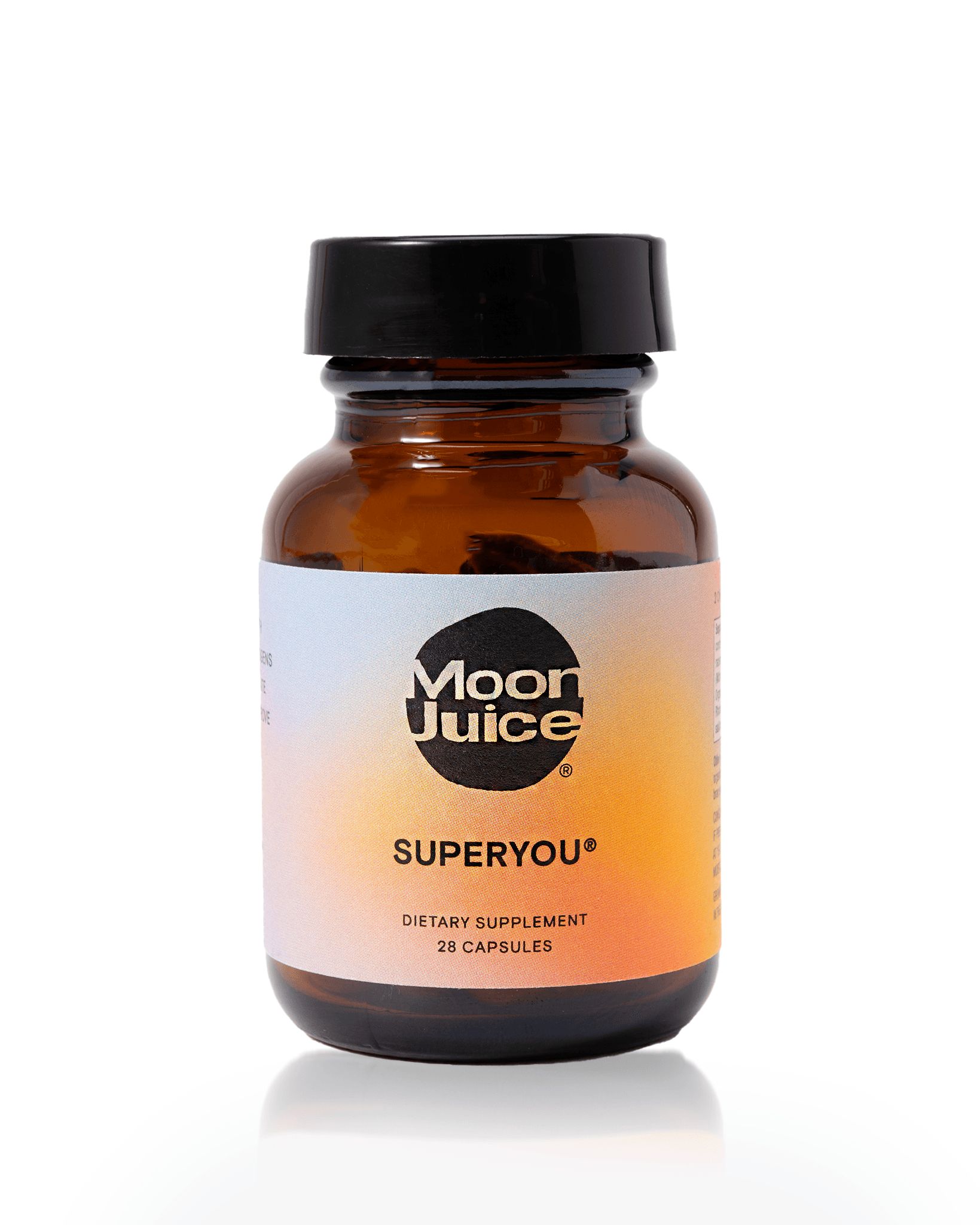
1 Moon Juice — SuperYou All-in-one adaptogen blend for stress resilience Rhodiola rosea extract, ashwagandha, holy basil, amla ★ 4.8
2 Forest Super Foods — Organic Ashwagandha Capsules Clean single-adaptogen pairing for Rhodiola stacks Organic ashwagandha root extract
3 Nutricost — L-Theanine Capsules Stacking with Rhodiola for calm, jitter-free focus L-theanine ★ 4.7
4 FreshCap Mushrooms — Cordyceps Mushroom Extract Powder Energy & stamina stacking with Rhodiola Cordyceps militaris fruiting body extract ★ 4.8
5 Neuro — Energy & Focus™ Mints On-the-go functional boost for busy days Caffeine, L-theanine, B vitamins (see label for full formula) ★ 4.6

1. Moon Juice — SuperYou

★ 4.8 (3268)
All-in-one adaptogen blend for stress resilience

SuperYou stacks Rhodiola alongside ashwagandha, holy basil, and amla into a four-adaptogen daily capsule that's become a cult favorite for good reason. Moon Juice is transparent about sourcing and the formula covers multiple stress pathways at once, making it the easiest on-ramp for adaptogen newcomers.

View product → from $93.27
2

2. Forest Super Foods — Organic Ashwagandha Capsules

Clean single-adaptogen pairing for Rhodiola stacks

If you're running Rhodiola solo and want to add a second adaptogen for deeper stress support without the complexity of a full blend, Forest Super Foods' organic ashwagandha is a clean, high-rated option. Organic certification and a minimalist formula mean you know exactly what you're getting as a complement to your Rhodiola routine.

3. Nutricost — L-Theanine Capsules

★ 4.7 (2421)
Stacking with Rhodiola for calm, jitter-free focus

L-theanine is arguably the best companion ingredient for Rhodiola — it takes the subtle activating edge and smooths it into clean, calm focus. Nutricost's capsules are straightforwardly dosed, third-party tested, and priced so accessibly that there's no reason not to have them in the stack.

View product → from $13.97

4. FreshCap Mushrooms — Cordyceps Mushroom Extract Powder

★ 4.8 (4038)
Energy & stamina stacking with Rhodiola

Cordyceps is the functional mushroom most closely associated with physical energy and oxygen utilization, making it a natural pairing for Rhodiola when stamina is the goal. FreshCap uses hot-water extracted whole fruiting bodies — not mycelium on grain — so you're getting concentrated active compounds, not filler.

View product → from $39.99

5. Neuro — Energy & Focus™ Mints

★ 4.6 (2277)
On-the-go functional boost for busy days

When you want a Rhodiola-adjacent functional lift in a grab-and-go format, Neuro's mints deliver a thoughtfully blended combination of energy and focus ingredients in a format that's genuinely convenient. Great for travel, desk use, or any situation where capsules aren't practical.

View product → from $24.99

What Does Rhodiola Rosea Actually Do?

Rhodiola is classified as an adaptogen — a compound thought to help the body maintain balance under physical and mental stress. The most-cited active compounds are rosavins (a group of phenylpropanoids unique to Rhodiola rosea) and salidroside (a phenylethanol glycoside). Research suggests Rhodiola may support perceived energy, mental clarity during demanding tasks, and a sense of calm focus — though effects are generally modest and individual response varies. It's not a stimulant in the caffeine sense, and it won't wire you; most users describe it as a subtle but consistent lift in baseline resilience.

It's worth knowing what Rhodiola is *not*: it is not a treatment or cure for fatigue, burnout, anxiety, or any medical condition. The evidence base is promising but still maturing, and most high-quality studies use specific standardized extracts at defined doses. When you see a blend that just says "Rhodiola rosea extract" without standardization details, that's a yellow flag.

Rhodiola Alone vs. Adaptogen Blends: Which Should You Choose?

Single-ingredient Rhodiola is the right call if you want to isolate your results, control your dose precisely, or are already running a multi-supplement stack. You'll know exactly what you're getting and can adjust up or down based on how your body responds. Single-ingredient formats also make it easier to identify whether Rhodiola specifically is working for you.

Adaptogen blends — like those combining Rhodiola with ashwagandha, Siberian ginseng, or holy basil — can be a smart shortcut if you want broad-spectrum stress support without managing five separate bottles. The trade-off is less precise dosing of any individual herb and slightly less ability to pinpoint what's driving results. For beginners, a quality blend from a transparent brand is often the lowest-friction entry point. For optimizers who've already experimented, a standardized single extract is usually the better tool.

How to Stack Rhodiola for Energy vs. Calm Focus

Timing and pairing matter with Rhodiola. Most practitioners suggest taking it in the morning or early afternoon on an empty or light stomach, as it tends to be mildly activating — taking it too late in the day may interfere with winding down for some users. For energy and stamina, Rhodiola pairs naturally with functional mushrooms like cordyceps, which also has a traditional association with physical endurance. For calm focus, pairing Rhodiola with L-theanine (the amino acid found in green tea) is a popular stack: Rhodiola provides the lift, L-theanine smooths the edges.

Start low — 200–400mg of a standardized extract is a common starting range — and give it two to four weeks of consistent use before judging effectiveness. Adaptogens are not acute supplements; they tend to work gradually and cumulatively. And as always, cycling (e.g., 8 weeks on, 2 weeks off) is a common practice in the adaptogen community, though the science on cycling necessity is not definitive.

FAQ

How long does Rhodiola rosea take to work?

Most people don't notice dramatic effects after a single dose — Rhodiola is an adaptogen, meaning it tends to build gradually. A consistent two-to-four week trial is the standard recommendation before drawing conclusions. Some users report a subtle sense of reduced mental fatigue in the first week; others need longer. If you've noticed nothing after six weeks at a reasonable dose, it may simply not be the right tool for you.

Can you take Rhodiola rosea every day?

Many people do take it daily, and most research protocols involve daily use. That said, some adaptogen enthusiasts practice cycling — for example, 8 weeks on followed by a 1-2 week break — as a precautionary habit. The science on whether cycling is necessary is not settled. As with any supplement, it's worth checking with your healthcare provider, especially if you take medications or have an underlying health condition. This is not medical advice.

What's the difference between Rhodiola rosea and ashwagandha?

Both are adaptogens, but they have meaningfully different profiles. Rhodiola is generally considered more activating — people reach for it in the morning for energy and mental sharpness. Ashwagandha tends to be more calming and grounding, and is often taken in the evening or for sleep support. They're frequently combined in blends (like Moon Juice SuperYou) precisely because their effects are complementary rather than redundant. Neither is better in an absolute sense; it depends on what you're trying to address.

Shop these

Keep exploring